

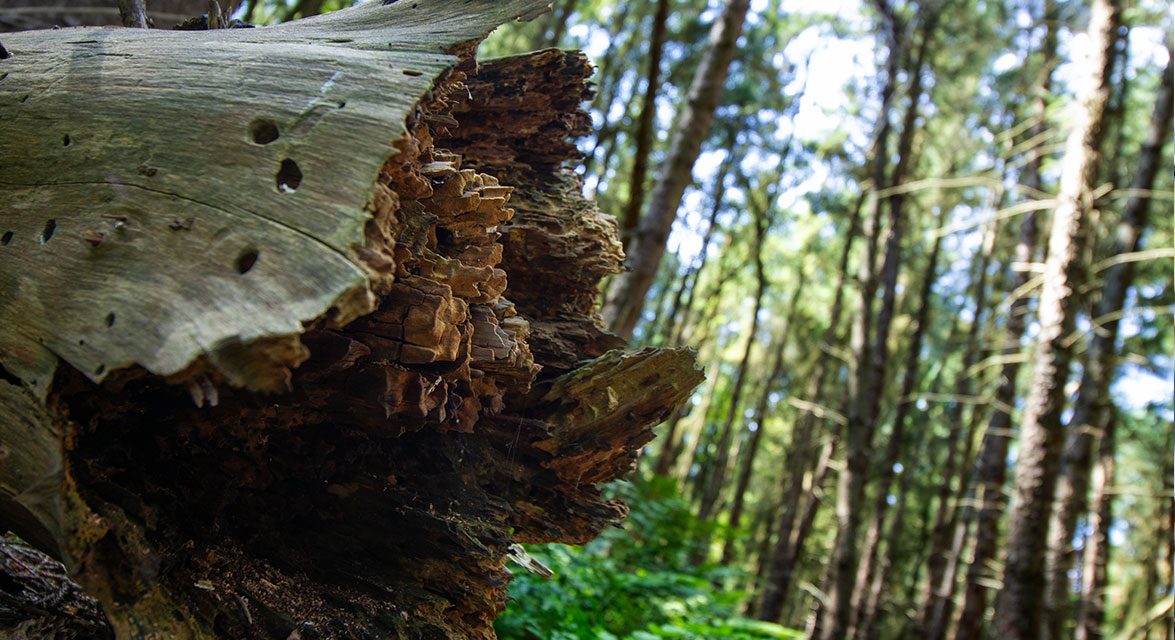
Europe has been experiencing an intense wildfire season. As of September 2026, more than 678,000 hectares in the EU have been affected by fires, according to the European Forest Fire Information System (EFFIS). A recent study led by the Potsdam Institute for Climate Impact Research (PIK) also shows that conditions for wildfires could become increasingly challenging in the long term. At the same time, the researchers conclude that improvements in prevention, early detection and firefighting can significantly limit their impact. Alongside direct firefighting efforts, this raises another question: how can forests and landscapes be managed proactively to strengthen their resilience and limit the spread of wildfires?
PREVENTION STARTS WITH ACTIVE LANDSCAPE MANAGEMENT
Whether a fire develops into a large-scale wildfire depends on various factors. High temperatures, drought, and strong winds can encourage the spread of fire. The structure of the landscape also plays an important role: where large quantities of dry and easily combustible vegetation have accumulated and flammable material is connected across larger areas, fires can spread particularly quickly. The European Forest Institute (EFI) therefore considers active forest and landscape management to be an important component of comprehensive wildfire prevention. This includes, for example, reducing fuel loads, removing dry and dead material, maintaining firebreaks, strategic grazing, and creating more diverse landscape structures. A site-specific approach is crucial, taking into account both the risk of fire and the long-term resilience and fertility of the soil.
WHAT HAPPENS TO THE BIOMASS?
Forest maintenance and management generate biomass. Which materials can be removed and how they can subsequently be used depends, among other things, on the specific site conditions, management objectives and requirements of sustainable forestry. Not all residual materials should be removed from the forest. Branches and crown material, in particular, can return important nutrients to the soil. Large-scale or permanent removal can lead to nutrient deficiencies in the long term, affecting soil fertility as well as the development and rotation period of trees. The two most widely used certification systems for wood products from sustainably managed forests, FSC® and PEFC, therefore set clear requirements. Any removal of biomass from the forest must be considered in the context of these requirements and the long-term impacts on the forest. It is therefore all the more important to distinguish between different types of material. Woody biomass from thinning operations, for example, can be processed into wood chips and used to generate renewable heat. For such material streams to be utilised effectively, sustainable management also needs to be supported by functioning structures for processing, marketing, and logistics. This gives material from forest management a specific purpose where its use is ecologically and silviculturally appropriate, making it part of regional value chains.
FROM FOREST MANAGEMENT TO ENERGY SUPPLY
This is exactly where the Brüning Group comes in: where suitable materials arise from forest management, we connect biomass streams with the appropriate routes to market, handling procurement, sales, and logistics ensuring that suitable materials reach where they are needed. For us, traceable sourcing is also an important consideration. We offer FSC®– and PEFC-certified materials and are committed to transparent, responsible supply chains. This means that suitable biomass generated through forest management can become a usable energy source – and part of a regional cycle connecting forest management, raw material utilisation, and energy supply.